
Barnes Foundation
Annenberg Court Cafe
The Light Court Café is a visible and revenue-generating part of the visitor experience at the Barnes Foundation, but its current temporary fixtures conflict with the carefully calibrated architectural composition of the Light Court. The space is defined by permanent elements—the bronze vestibule, granite fountain, and ipe floor—conceived as part of the Court’s “living room” at the scale of the long walls and high ceiling. By contrast, the existing café reads as utilitarian food-service infrastructure and has suffered wear over time.
The proposed redesign seeks to hide in plain sight, aligning the café more closely with the original architectural vision while supporting visitors’ desire to sit, gather, and linger. This is achieved through a permanent installation integrated into the existing bronze mass at the west end of the Court—a volume that already provides porch access, mechanical return air, and structural bracing. Shifting its east face approximately eight feet allows for the insertion of a compact, highly efficient café organized on all four sides.
The south side forms the discreet customer interface, recessed and largely invisible from the Light Court until approached, with adjacent seating naturally occurring to the south. The east side accommodates coffee preparation, refrigeration, and storage, with the potential for a subtle window into the Court. Back-of-house functions—including waste, hand washing, and storage—are consolidated on the west side, while the north side supports staff access and restocking from the service corridor.
Materials extend the language of the bronze vestibule, with durable interior finishes such as dark laminate, Corian, and stainless steel. The café is also designed for flexibility, allowing it to operate as an event bar or be fully concealed when required, preserving the Light Court’s architectural clarity.
Philadelphia, PA
Completed 2025
The primary customer-facing elevation is discreetly recessed, echoing the detailing of the bronze vestibule. It remains largely invisible from the Light Court until visitors approach closely. Given the vestibule’s slight northern alignment, the open area to the south naturally accommodates café seating. This side integrates a lowered ADA-compliant counter, point-of-sale station, and self-service elements for sugar, lids, and waste.
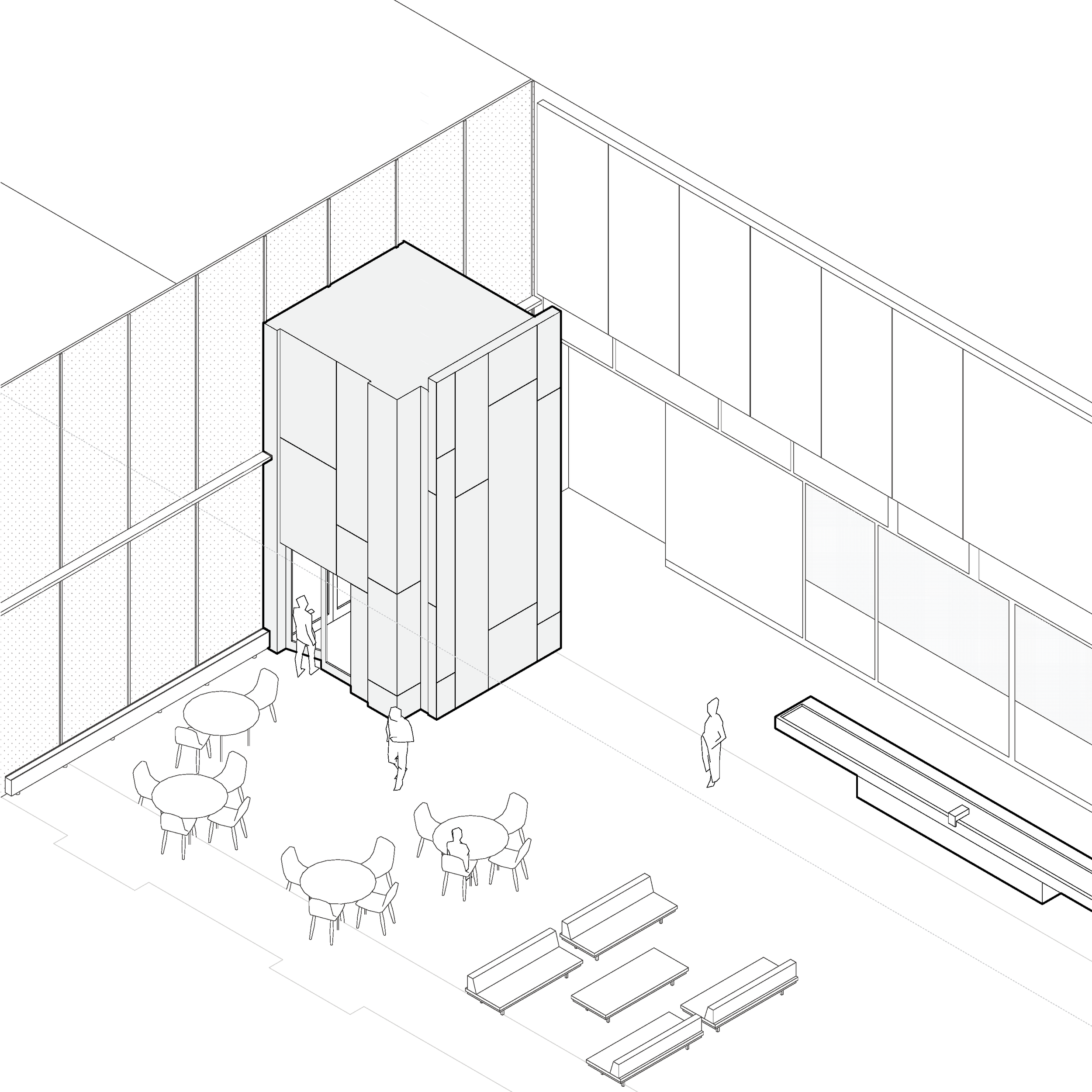
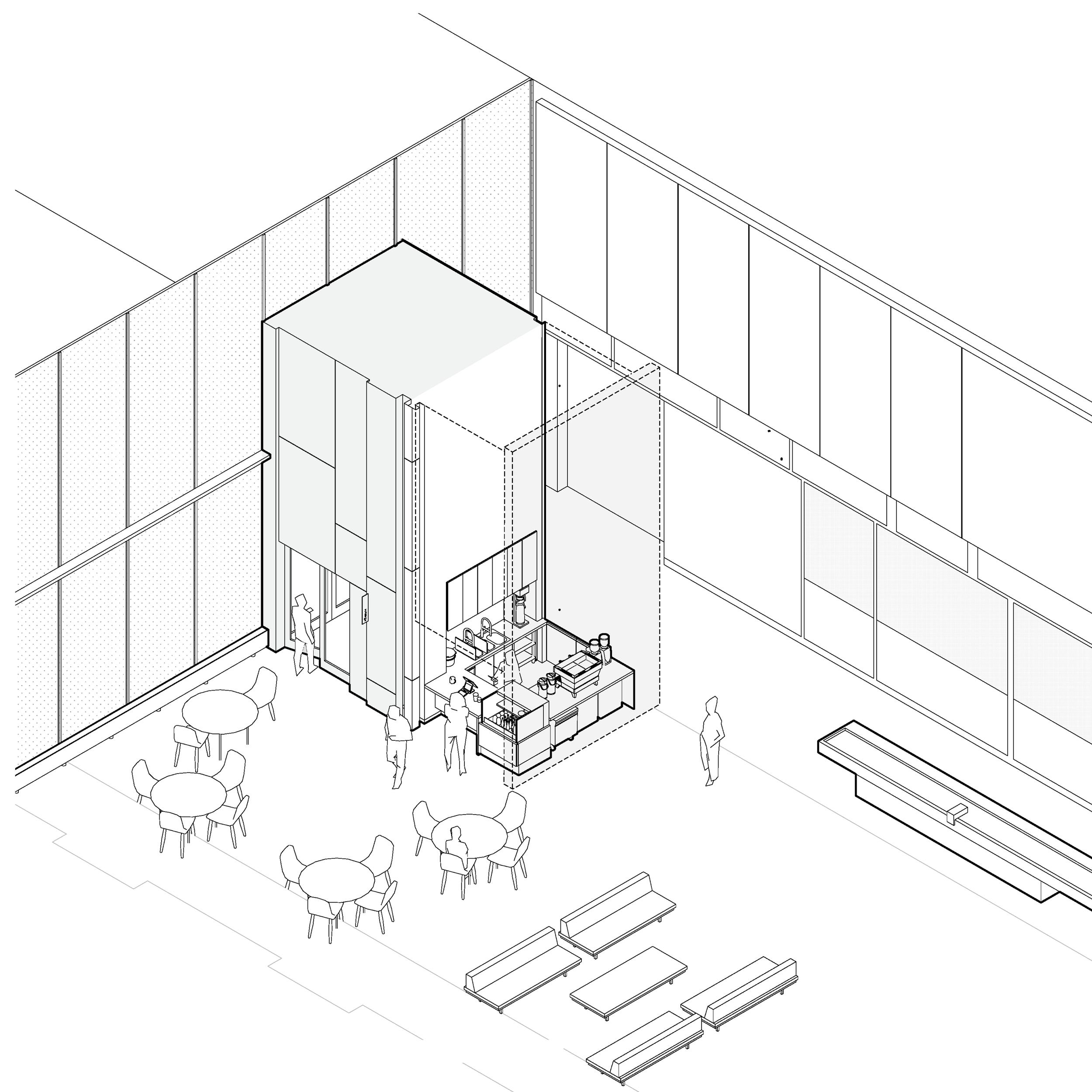
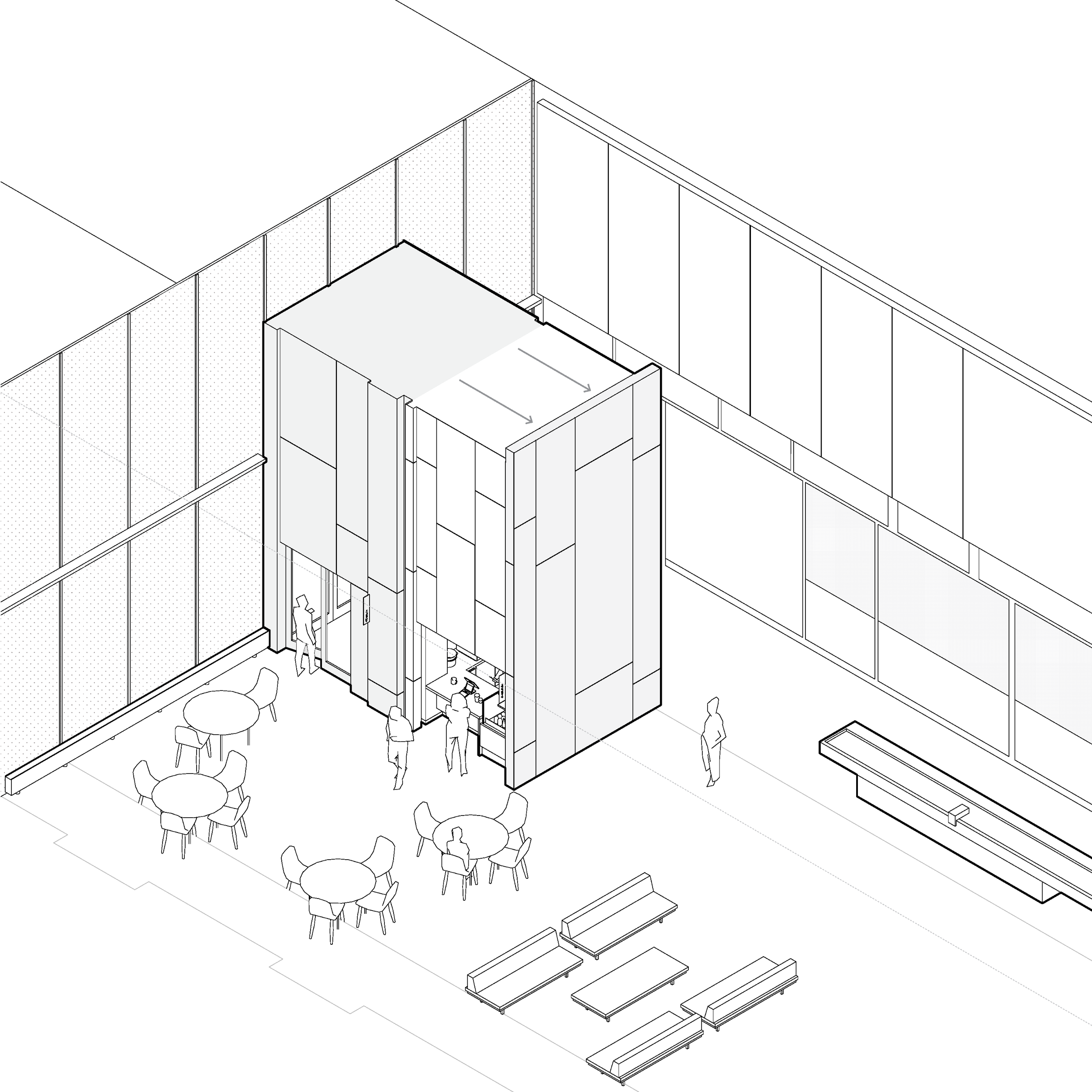
The original bronze clad structure includes a vestibule to the exterior terrace, laterally braces the large window wall, and houses the light court’s primary return air grille. The new cafe builds on the dimension of this bronze clad volume to create the cafe and a new mechanical room for all the noise-generating equipment required for the cafe. The lateral brace required the double height vertical dimension which then enables the design to deploy two “sash type” vertically operating doors that disappear when in the open position and match the bronze panel pattern and finish when in the closed position during an event when the cafe is not open. During events, the cafe can also serve as a food service bar.
With the physical limitations established by the existing vestibule and adjacency to a black granite fountain, the interior of the cafe is a carefully orchestrated assembly of functions and equipment.
The “sash-type” motorized door in the closed (left) and open (right) position. The perforated panel facilitates air flow through the space while still creating a visual barrier when the cafe is closed for operation.
The north elevation provides below- and above-counter storage, accessed via ladder, and a flip-top counter primarily intended for staff use. This side facilitates efficient restocking of food and beverages from the nearby service corridor and restaurant kitchen throughout the day.
Back to Institutional + Commercial