
Princeton University Offices
Facilities Finance and Administrative Services
The design of this office space, intended for the team responsible for managing the finances that support the University’s growth and upkeep, needed to balance the complexity and individuality of their work with areas of calm and respite. In a post-COVID world, where the economics of open workspaces—fitting more people into smaller spaces—collide with the rise of remote work and the need for healthier, more controlled environments, this project strikes a delicate balance.
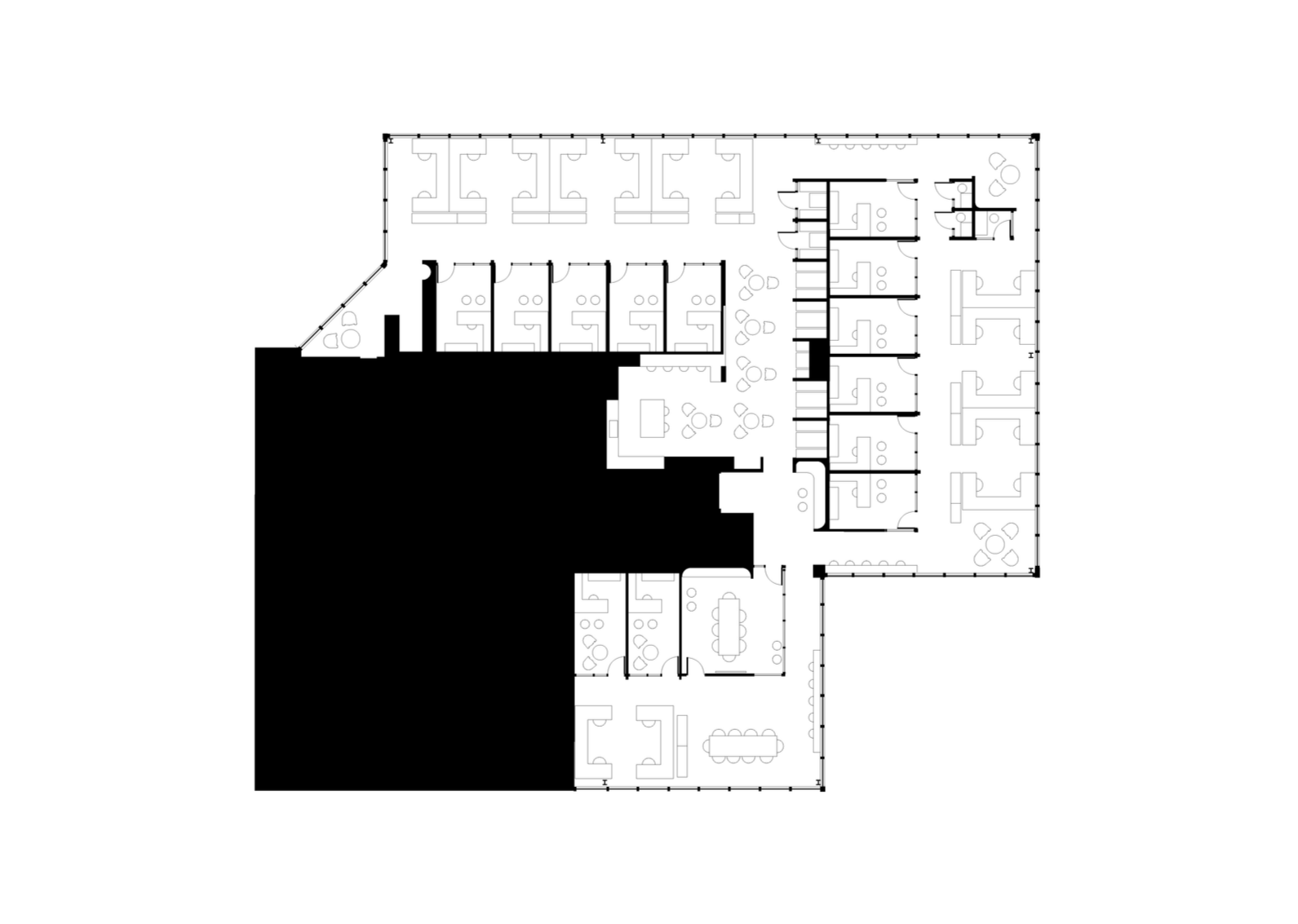
The new workspace is housed in a 1980s suburban office building featuring ribbon windows, generous floor-to-floor heights, but also a poorly performing envelope and mechanical systems. The design addresses these challenges while reflecting the organization’s tripartite structure by strategically placing enclosed offices and conference rooms to reduce noise and minimize distractions. Open workspaces are designed to be inviting and visually stimulating, positioning the majority of staff along the windows to take advantage of natural light and views—eschewing the traditional hierarchy where management occupies the prime spaces.
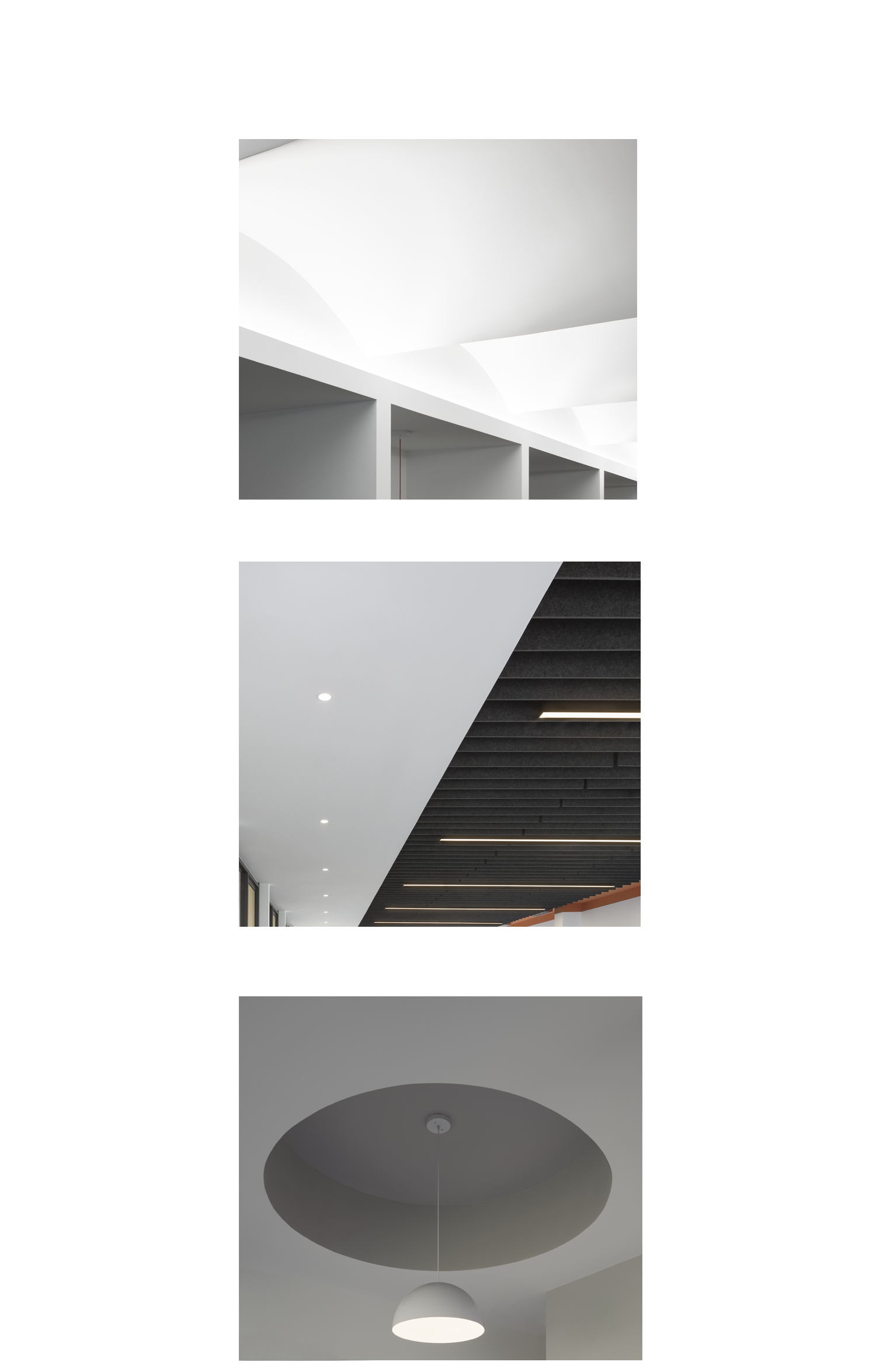
Ceilings are exposed to maximize volume and facilitate easy maintenance, with recycled plastic baffles suspended beneath to control acoustics and temper the visual impact of the Princeton-orange-painted structural systems. Shared breakout spaces are tucked into the corners, providing staff with areas to decompress or collaborate in quieter settings.
At the heart of the office, the canteen serves as an anchor, wrapped by the sound-dampening backsides of the enclosed offices. With the open workstations benefiting from the window views, the canteen creates its own atmosphere, featuring a soft, sculptural ceiling suggesting an interior sky and hues inspired by the green landscape outside. Scaled to accommodate all-hands meetings as well as informal gatherings and meals throughout the day, the canteen offers a central, dynamic space that fosters community within the office.
Princeton, NJ
Complete 2023
2024 NYCxDesign / Interior Design Magazine Award Finalist
Gathering
The ceiling is designed as an interior “sky” with a softness and dynamism that elevates the space above a normative working mode.
The kitchen area of the canteen extends the office’s material palette through the use of natural tones and finishes. Storage and appliances are fully integrated into the walls, allowing the space to function as an active, flexible workplace rather than a room solely dedicated to food preparation.
Overhead, ceiling features are articulated and framed by the separation of offices and other programmatic volumes, reinforcing the spatial hierarchy. Throughout the plan, corridors are carefully aligned to terminate in framed views of the surrounding landscape, strengthening the connection between interior spaces and their context.
Detailing throughout the space organizes patterns of occupation around warmth, color, and integrated planting. The intensity of the work environment necessitated a range of complementary spaces that allow staff to momentarily step away from their primary work areas, providing opportunities for relief and restoration.
In areas of the interior canteen where access to daylight and views is limited, biophilic design elements play a central role, grounding the space and reinforcing a sense of comfort, balance, and well-bei
The ceiling is conceived as an “artificial sky,” introducing variation and sculptural dynamism that animate the space and lend it a distinct architectural presence.
Working
The office is organized as a series of layered environments. Open work areas are defined by low partitions and acoustically attenuating baffles that preserve the flow of daylight while controlling sound transmission. These spaces are edged by shared corridors that incorporate storage, planting, and informal bench seating, creating active thresholds between circulation and work.
Enclosed offices maintain abundant access to light through tall glazed walls, while their placement and detailing are carefully calibrated to limit the spread of sound across the floor, supporting a balanced and comfortable acoustic environment.
While the offices do not possess an inherently “public” door, they did require a small reception area that would feel comfortable and separate from the confidential processed within.
Touch down spaces are scattered in the awkward gaps where acoustics warranted separation or the plan did not afford adherence to a strict planning strategy.
Photography By Devon Banks Photography
Back to Institutional + Commercial