
Princeton University
Conference Center
The offices are designed for a unique entity within the University that primarily engages with external organizations beyond the traditional academic sphere. Consequently, the design needed to address and resonate with a broader, non-academic audience while supporting a diverse range of activities. Situated within two interconnected buildings constructed in 1960 and 1980, the project involved an extensive renovation of three floors, re-imagining the space to align with the organization’s dynamic, 21st-century operations and to foster a vibrant, collaborative atmosphere for its hardworking staff.
A key feature of the new design is the conference wing, which transforms the traditional boardroom concept. When not in use, the boardroom opens up to contribute natural light and airflow to the building’s core, creating a welcoming and transparent environment. For quarterly meetings that require multiple breakout sessions, the conference center provides additional meeting spaces and integrated technology, ensuring a seamless blend of aesthetic coherence and high functionality.
Employee amenity spaces celebrate the mid-century architecture by exposing the original 1960s concrete structural ceilings. This departure from conventional acoustic ceiling tiles and standard glass office designs creates a warm, inviting atmosphere that balances comfort with sophistication, making the spaces ideal for both informal meetings and restorative breaks.
Princeton, NJ
Completion 2024
AIA Brooklyn Award 2024
Collaboration
The conference center occupies approximately half of the shared floor plate across the two buildings. At its core is the boardroom, which anchors the center and serves as the primary gathering space for large, multi-group meetings that require adjacent breakout and collaboration areas.
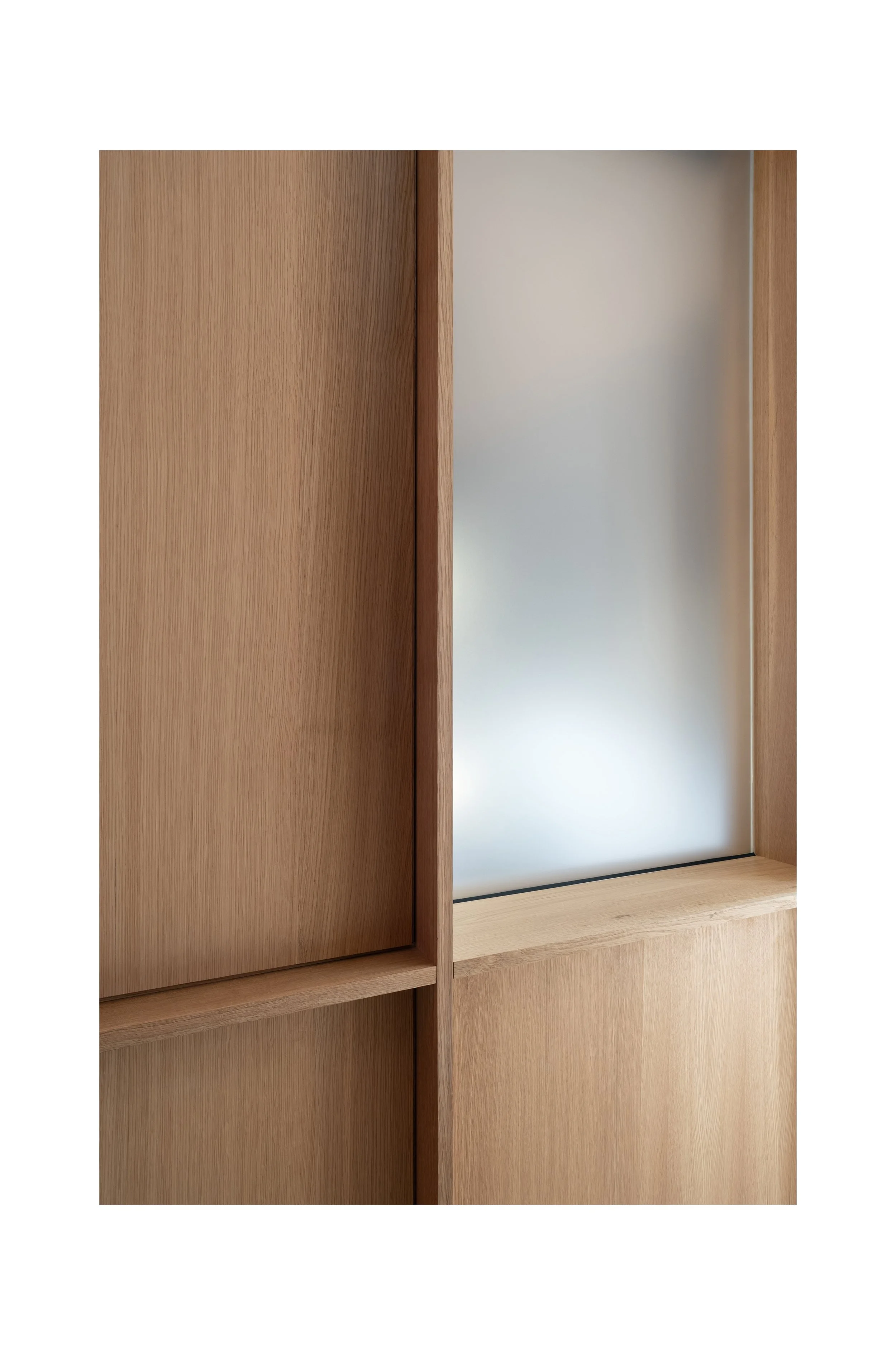
Carefully detailed wall and door systems allow the boardroom’s perimeter doors to retract fully into concealed wall pockets, transforming the room—when not in use—into an open terminus of a continuous, wood-paneled corridor. Support spaces, including a pantry, storage closet, and extensive building services, are discreetly integrated within ceiling planes and wall panels, preserving the clarity and calm of the architectural composition.
Reception, the board room, pantry, and a small break out room are designed like a single piece of wood furniture. Lightly floating off the ground and wrapped in oak wall and ceiling panels. Furniture and doors are integrated, seemingly folding out of the cabinet walls.
The boardroom is defined by a thirty-foot custom dark oak conference table, designed in modular sections to allow installation within the constraints of the existing building. Stone alcoves clad in Indian quartzite provide moments of weight and tactility, while discreet wood-paneled doors conceal storage, audiovisual equipment, and guest coat closets.
A lowered ceiling integrates upgraded building systems and is carefully shaped to direct sound along the length of the table, supporting the demands of a workplace increasingly oriented toward web-based conferencing. Elsewhere across the floor, higher ceilings are articulated with acoustically attenuating batten panels that introduce warmth, texture, and improved sound performance throughout the spaces.
Gathering
The canteen serves as the social and spatial heart of the three floors of offices and meeting spaces. A large glass partition wall allows sound levels to be carefully managed, limiting noise transfer to adjacent quiet work areas while maintaining visual continuity and the flow of light and air.
The original 1960s concrete frame is reinterpreted through a palette of gray, hand-tooled plaster and inset acoustic panels. These elements both soften the structure and discreetly conceal LED drivers and other technical infrastructure, reinforcing a calm, highly integrated environment.
The Canteen, the primary “all-hands” space for the sixty person organization, is given added flexibility to acoustically isolate the room for other spaces in the building with a hidden, stacked glass wall. The cast in place concrete structure is exposed and plastered to add ceiling height and light to the space. A variety of seating areas afford individual and shared dining.
Working
Conference rooms are designed to match the cadence of the existing fenestration and add new acoustic treatments, warmth, and technology. The palette of interior furniture selections is warm and residential feeling. Careful analysis to consider proximity of meeting spaces to work areas was key to the new renovation.
Colors are understated and coordinated to create a sense of continuity across the entire two story renovation. The bones of an existing 1960’s era cast in place concrete building are exposed to reveal ceiling height for a staff canteen that is visible from adjacent work and meeting spaces.
Workspaces were developed through a careful inventory of existing furniture, prioritizing reuse and refurbishment wherever possible. Finishes and color palettes align with those used throughout the renovation, establishing a level of cohesion previously absent from the workplace environment. This visual continuity, combined with increased transparency between spaces, allows the work areas to feel more generous, connected, and engaged with the shared life of the office.
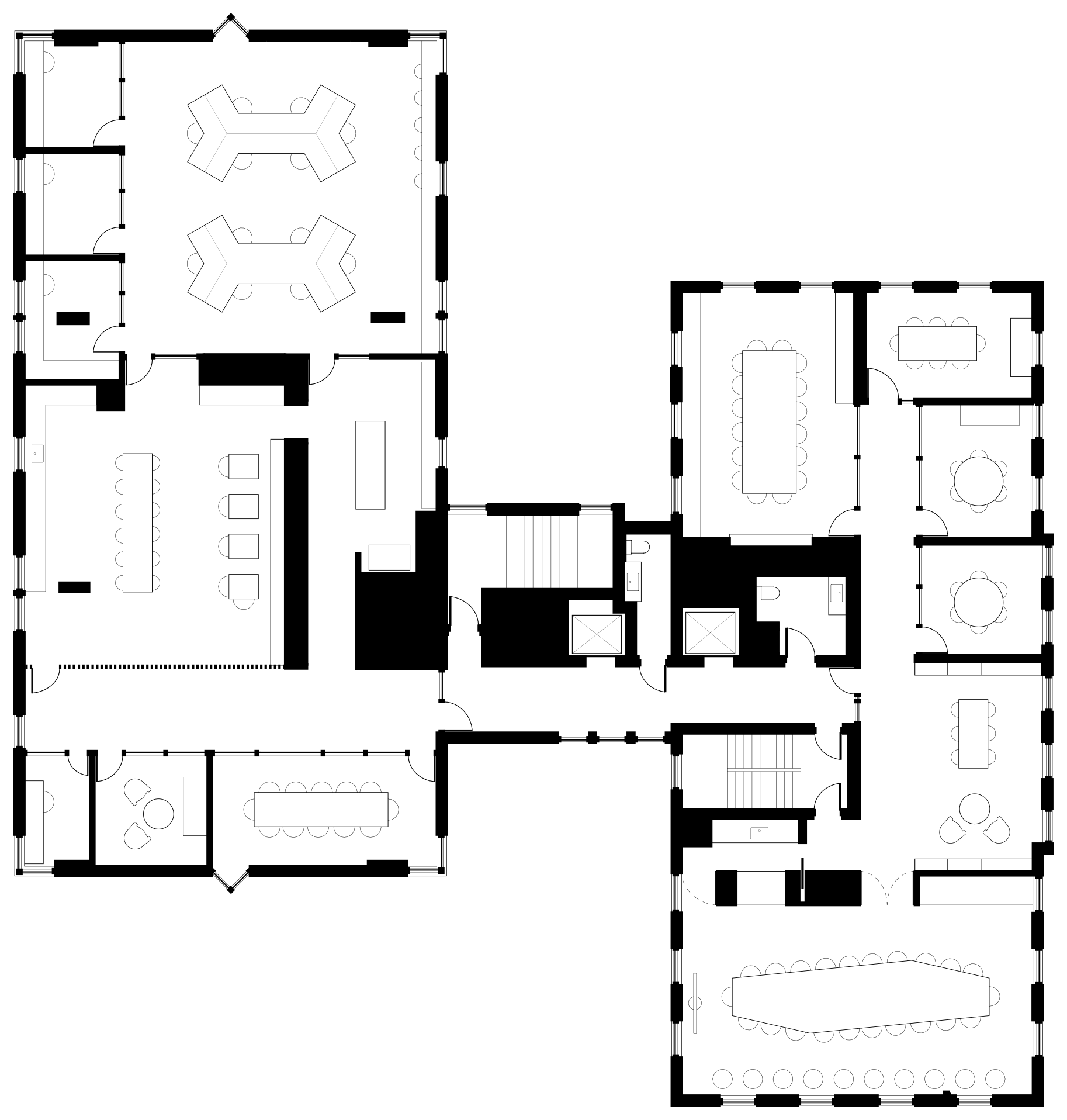
Floor 3 - Conference Center + Gathering Spaces
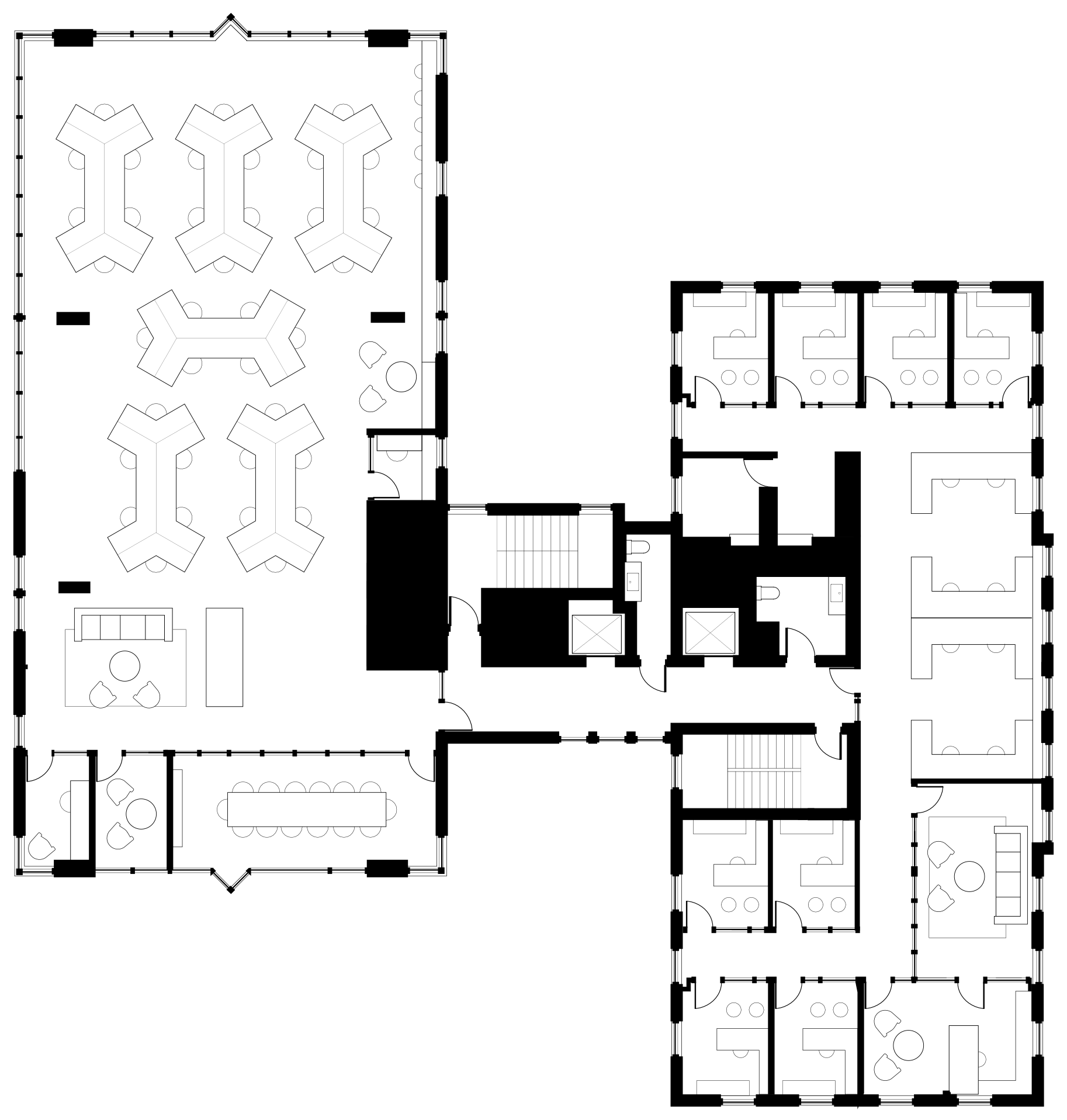
Floor 4 - Work Spaces + Executive Offices
Photography By Devon Banks Photography
Back to Institutional + Commercial