
University Student Center
A late nineteenth century pair of mirrored rowhouses require an upgrade to facilitate better use in prominent central campus location. The initial design phases contrast a more sustainable, historically sensitive renovation and addition versus a full re-build to maximize accessibility and efficiency.
Together, the two design approaches offer a comprehensive demonstration of how thoughtful architectural strategies can strengthen historic contexts while expanding the capabilities of academic buildings to support public life, collaboration, and contemporary learning. Both explore how a new building can respectfully inhabit a sensitive site while delivering flexible program space, enhanced accessibility, and improved connections to surrounding academic facilities.
One approach preserves and builds upon an existing historic masonry façade, using it as a contextual anchor that conceals a new structure positioned discreetly behind it. This strategy maintains the familiar scale of the original building while introducing generous public spaces, hybrid work environments, and daylight-filled upper levels. Renderings and section studies show how the massing supports extensive glazing along key elevations, blends new and old architectural expressions, and creates a series of spaces—from lounges to study areas—that nurture academic engagement.
The second approach introduces a fully new structure that employs a stepped massing strategy and a sequence of “porches” to mediate scale and foster interaction. This design emphasizes openness and flexibility: floor plates integrate circulation and workspace, interior program areas connect vertically through a monumental stair, and multiple terraces and covered outdoor areas extend learning and gathering into the landscape. Renderings illustrate how colonnades, terraces, and deeply recessed façades create depth, shade, and architectural resonance with surrounding buildings, while maintaining a strong public presence.
Across both concepts, the plans highlight the incorporation of modern building systems, sustainable structural options, and fully accessible vertical circulation. Each design supports a balanced mix of public lounges, flexible workspaces, faculty areas, meeting rooms, and assembly spaces—demonstrating an ability to tailor academic environments to evolving institutional needs. Both approaches expand usable area while managing height, light, and façade articulation in ways that reinforce the character and comfort of their setting.
In Design
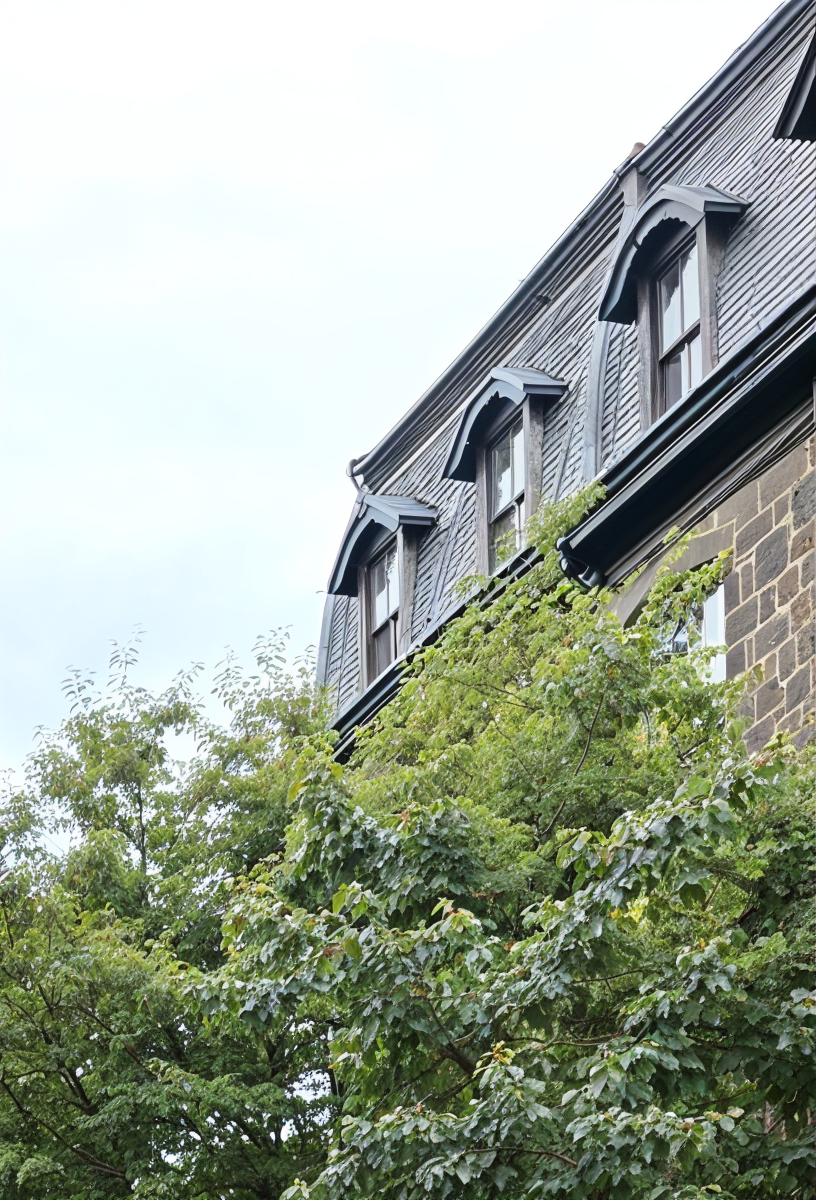
Historic Rehabilitation + Addition
To maintain continuity within the historic core of the campus, the scheme preserves the existing façade and roofline, allowing the original building to remain legible within the streetscape. This retained envelope becomes a structural frame, behind which a new building and structure are introduced to improve accessibility and support more efficient use of space for student groups, collaboration, and events.
Entry to the new building addition is positioned behind the historic façade, where accessible and seamless connections to public spaces can be achieved. A café, study rooms, and new vertical circulation animate the building throughout its height, creating a series of interconnected spaces for gathering and study. Brick pavers echo the material language of the pedestrian thoroughfare that brings students into the campus, extending its character into the building interior.
The Porch : A Rebuild
The Porch building scheme addresses longstanding accessibility challenges while establishing an active lobby that connects directly to the life of the adjacent pedestrian thoroughfare. Each floor is conceived as a transparent space for gathering and events: a café and lounge at the ground level, a multi-purpose room above, a covered terrace on the third floor, and a roof terrace at the fourth. A system of precast concrete structure and panels, finished in a light red hue, forms a rational and legible assembly that filters light and frames activity within the building, giving coherence to both its interior spaces and its public presence.
The cafe anchors the rear of the building, drawing students and activity through the building. The lobby includes a double height space with a curved stair leading up to the second floor events space.
The second floor events space has open views onto the surrounding campus and a dynamic wood ceiling for absorbing and diminishing sound reflection.
The building reads as a series of porches along the pedestrian walk, revealing activity within.
Back to Institutional + Commercial